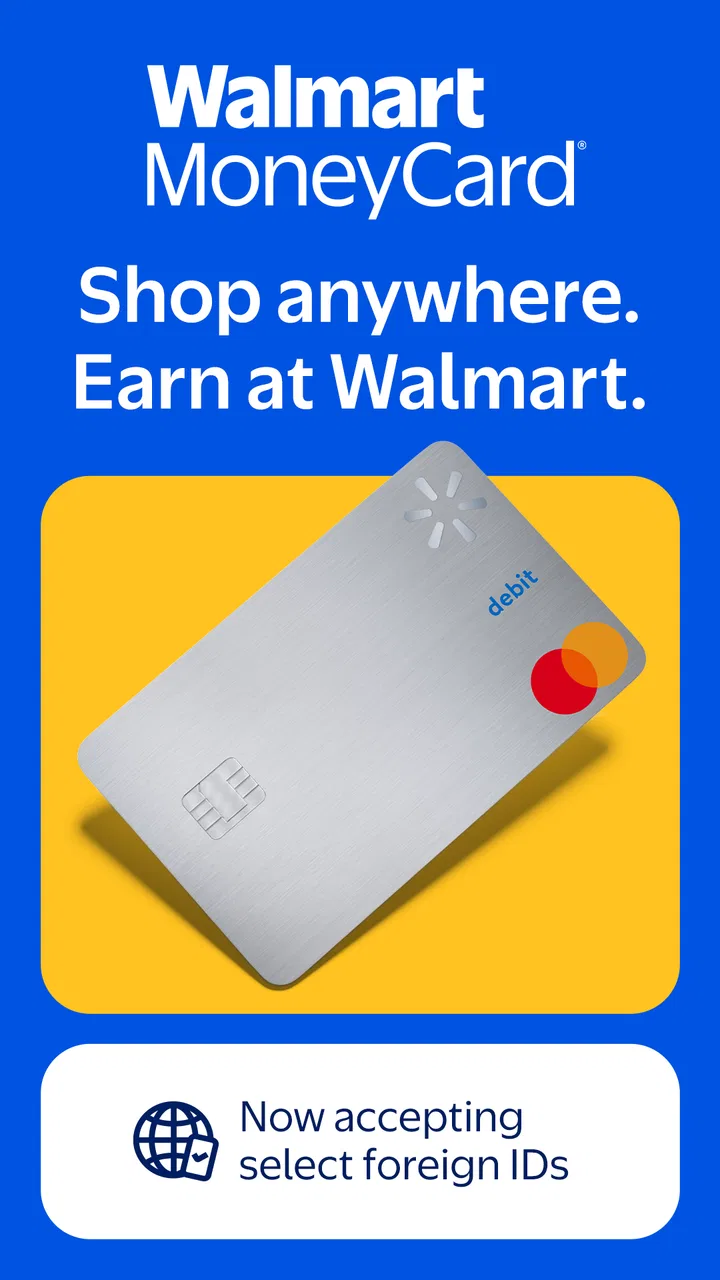
Walmart MoneyCard®
- 3.8
- Rating
- 500.00K
- Installs
- Free
- Price

 Analysis by App-foxy
I approached Walmart MoneyCard® as a practical finance app rather than something flashy. It is designed to put a Walmart MoneyCard account within easier reach from a phone, and the main question is whether it makes everyday money management less awkward. After spending time with the app, my impression is that it works best when you treat it as a regular financial routine: check your available balance, review recent activity, plan around incoming money, and keep the account details you use most often close at hand.
The app comes from Green Dot, is free to install, and sits in the mature-audience finance category. Its current version is 2.7.0, with support beginning at Android 9. The listing shows over 500 thousand installs, a 3.8 average from around 3.7 thousand ratings, and about 1.9 thousand written reviews. Those figures suggest a reasonably established product, although the rating also tells me this is not an app I would recommend blindly to everyone.
How Walmart MoneyCard® fits into a real money routine
The most useful way to use the app is to make it part of a repeatable check-in rather than opening it only when something goes wrong. I would start by checking the available balance before a shopping trip, then look through recent transactions after purchases have settled. That simple habit can make a prepaid account easier to control because it keeps spending decisions connected to the money actually available, instead of relying on memory or an old notification.
You May Also Like

 Google Keep - Notes and lists
Google Keep’s Quiet Growth Shows the Appeal of Simpler Notes
As mobile work gets busier, Google Keep keeps winning a simple contest: capture a thought quickly, find it later, and get on with the day.

 Blood Strike: 2.5 Anniversary
Blood Strike’s Loadouts Turn Every Drop Into a Tactical Gamble
A close look at Blood Strike’s custom loadouts: how fast access to signature weapons reshapes its battle royale rhythm, rewards preparation, and narrows the gap between fights.

 Pandora - Music & Podcasts
Pandora’s Music Is Easy to Start, but Harder to Recover
Pandora’s strength is its low-effort path from a seed to a station. Its weak spot is how much confidence it asks you to place in connection, setup, and quiet recovery.

 8 Ball Pool
 Is Built on Rivalries, Rematches, and Routine
A close look at the rivalries, rematches, shared routines, and unanswered safety questions that turn a quick pool match into a persistent mobile community.

 Samsung Music
’s Quiet Strength Is Playing What You Already Own
Its reach comes less from spectacle than from dependable access to a personal library. That simplicity is both the app’s strongest retention engine and its ceiling.

 AccuWeather: Weather Radar
AccuWeather Review: A Quick, Clear Forecast for Everyday Decisions
For everyday plans, the best forecast is the one you can understand quickly. AccuWeather makes rain timing, radar, and local conditions easy to act on, with a few trade-offs.
More From Our News Desk



A realistic example is a weekly household shopping routine. Before leaving home, I would open the app and confirm the balance. Afterward, I would review the activity to make sure the expected purchase appears and that the remaining amount still covers planned expenses. If the account is used for a specific purpose, such as groceries or personal spending, this quick review also makes it easier to notice when an unplanned purchase has changed the week’s budget.
This is where the app feels more useful than managing the card through occasional paper records or trying to remember transactions from a general banking app. The information is tied to the Walmart MoneyCard account, so the workflow is focused. I do not have to sort through unrelated checking, savings, or investment activity just to answer a basic question about the card.
At the same time, I would not mistake focused access for a complete financial planning tool. The app is not the place I would build a detailed household budget, compare several bank accounts, or track long-term goals across multiple institutions. For those jobs, a full banking app or dedicated budgeting service may be better. Walmart MoneyCard® is strongest when the task is immediate account awareness.
The first checks I would make after installing it
My first step would be to sign in carefully and confirm that the account information shown in the app matches the card I intend to use. Finance apps deserve a slower setup than entertainment apps. I would also make sure my phone has a screen lock enabled and avoid checking account details on a shared device. These are ordinary precautions, but they matter more when an app gives direct access to card activity.
Once inside, I would spend a few minutes learning where the balance, transaction history, and account-management areas are located. The goal is not to explore every screen at once. It is to reduce the number of taps needed for the actions I repeat. If I can open the app, verify the balance, and inspect a recent transaction without hesitation, I already have the core workflow I need.
One useful habit is to check the transaction list at a consistent time instead of refreshing it repeatedly throughout the day. A morning check can help with planning, while an evening check can help reconcile purchases. Repeatedly opening the app after every small transaction may create anxiety without adding much information, particularly when card activity takes time to appear or update.
I would also keep the physical card and the app in the same mental system. The app can show account activity, but it does not remove the need to protect the card, recognize where it is, and respond promptly if a transaction looks unfamiliar. A phone-based view is convenient; it is not a substitute for careful card habits.
Settings that deserve attention
Finance apps are often judged by their main screen, but experienced use depends just as much on the surrounding phone and account settings. I would review notification preferences so that useful account alerts are not buried among unrelated notifications. I would also check whether the app is allowed to notify me reliably, because a disabled or restricted notification setting can make a financial app feel unreliable even when the account itself is working normally.
There is a trade-off here. More alerts can make activity easier to notice, but too many notifications can become background noise. I prefer a setup that highlights meaningful account events while leaving routine promotional or low-value interruptions out of my daily attention, where the available controls allow that distinction.
Privacy settings on the phone are worth checking too. I would avoid displaying sensitive financial previews on a lock screen if other people might see the device. I would also review saved passwords and autofill carefully, especially on a phone used by more than one person. Convenience is valuable, but a finance app should not be configured as though it were a casual social app.
Another setting-related point is device maintenance. Keeping the operating system and the app current is sensible, particularly for an account-management tool. The listed minimum is Android 9, so users on older devices should not assume compatibility. On a supported phone, I would still leave enough storage available for normal updates and restart the device if the app begins behaving unusually before assuming the account is at fault.
I would not change account details impulsively while rushing through a checkout or standing in a crowded store. If the app presents a security or verification step, I would complete it somewhere calm and read the wording carefully. The best setting is often the one that prevents a hurried mistake: a secure screen lock, controlled notifications, and sign-in details that are not casually shared.
Faster patterns for everyday use
Once the basic routine is comfortable, the biggest speed improvement comes from deciding what each app visit is for. If I only need to know whether a purchase is affordable, I check the balance first. If I am reconciling spending, I go directly to recent activity. If I am investigating a problem, I note the merchant, amount, and timing before contacting support or taking another step. This prevents aimless tapping and gives each session a clear purpose.
I also like separating “planning checks” from “problem checks.” A planning check happens before spending and should be quick. A problem check deserves more attention: I would compare the transaction with receipts, consider whether a pending purchase has changed status, and avoid making a second payment simply because the first one is not immediately obvious. That distinction is especially helpful for users who tend to react to an incomplete activity list.
A second practical pattern is to use a small written spending plan alongside the app. The app can show what has happened to the account, while a note on the phone can record what still needs to be paid. Keeping those roles separate is more reliable than expecting the card app to become a complete budget planner. I find this approach useful for recurring personal limits because it turns the balance into a decision point rather than a vague number.
For shared household finances, I would agree on a simple review habit rather than sharing login credentials. One person can be responsible for checking the account at an agreed time, while each card user keeps receipts for purchases that need explanation. Sharing access may seem faster, but it creates confusion about who changed what and makes account security harder to manage.
Another overlooked workflow is preparing for support before asking for help. If something looks wrong, I would record the transaction description, amount, date shown in the activity list, and what I expected to see. I would not send passwords, full security codes, or unnecessary personal information in a message. Clear notes make the conversation more efficient and reduce the temptation to repeatedly retry an action that may already be processing.
Where the app reaches its limits
The main limitation is scope. Walmart MoneyCard® gives me a focused way to interact with this card account, but it is not a replacement for a traditional bank relationship in every situation. Someone who needs broad account aggregation, sophisticated categorization, investment access, or detailed forecasting will probably feel constrained. A conventional banking app may offer a wider financial picture, while a budgeting app may provide better tools for planning across accounts.
I would also be cautious about treating the displayed balance as permission to spend every dollar immediately. A balance is useful, but responsible decisions still require awareness of pending activity, planned bills, and purchases that have not yet appeared in the way I expect. The app can improve visibility; it cannot make the user’s financial timing decisions automatically.
The mature age classification is another reminder to treat the app as a serious financial tool. I would not hand it to a child as an informal allowance tracker without adult oversight. For an adult managing a prepaid card, the category makes sense, but younger users may need a different product with clearer parental controls and education features.
Users who dislike prepaid-card workflows should think carefully before choosing this app. If your priority is a full-service checking account, branch support, extensive money movement options, or a unified view of every financial product you own, a traditional bank app may fit better. If your priority is keeping spending separated from a main account and checking the Walmart MoneyCard account from a phone, this focused approach is more appealing.
Performance expectations should also be realistic. A finance app can feel slow when the real issue is connectivity, account verification, or transaction processing rather than the interface itself. I would avoid making repeated attempts when a sensitive action appears stuck. First I would confirm the network connection, wait briefly, and check whether the activity changed before trying again. That small pause can prevent duplicate actions and unnecessary confusion.
Who will get the most from it
I think the app suits people who already use a Walmart MoneyCard and want a straightforward mobile view of their account. It can also work well for someone who wants to keep a defined spending amount separate from other money, provided they are comfortable with the limits of a prepaid-card setup. The free price removes an obvious barrier to trying it, although the value still depends on whether this particular account structure matches your needs.
It is less suitable for someone searching for a complete personal-finance dashboard. I would skip it if I needed one app to combine several institutions, build detailed reports, or replace every banking task. I would also hesitate to recommend it to anyone who rarely checks account activity, because the benefit depends on using the information rather than merely having the app installed.
The current rating of 3.8 is fair in the sense that the app’s purpose is clear, but a focused finance app has little room for friction. When the core experience is simply checking money and activity, sign-in trouble, unclear status, or a confusing transaction view can have an outsized effect on how trustworthy the product feels. My recommendation is therefore practical rather than enthusiastic: try it if the Walmart MoneyCard is already part of your financial routine, and judge it by how quickly it answers your everyday questions.
My verdict after building a repeatable routine
Green Dot’s Walmart MoneyCard® is best understood as a companion for managing one specific prepaid-card relationship from a phone. I like the focused purpose because it keeps routine checks from getting lost inside a larger banking dashboard. The app is most valuable when I use it before spending, after spending, and whenever I need to reconcile an unexpected transaction.
My preferred setup would be simple: secure the phone, review notifications, learn the quickest route to balance and activity, and use a written note for plans the app does not cover. I would check the account on a schedule, investigate unusual activity with specific details, and avoid making hurried repeat attempts when information appears delayed. Those habits do more for the experience than constantly searching for extra features.
The real strength is dependable account awareness, not financial complexity. If that is what you need, the free app is a sensible option to test. If you want a full bank replacement or advanced budgeting system, I would choose a broader tool instead. For existing Walmart MoneyCard users who prefer a direct, phone-based routine, it earns a measured recommendation: useful, focused, and worth keeping only if its everyday checks genuinely make your money easier to manage.
FAQs for Walmart MoneyCard®
01What is Walmart MoneyCard® and how does it work?
Walmart MoneyCard® is a reloadable prepaid debit card and mobile app designed for everyday money management. After adding funds, you can generally use the card for purchases wherever the card network is accepted, pay bills, check your balance, review transactions, and manage account settings from the app. It is not a traditional bank account, so available features and protections may differ from those offered by a bank.
02How can I add money to my Walmart MoneyCard® account?
The app supports several ways to fund your account, although the exact options can depend on eligibility, location, and current program terms. Users may be able to receive direct deposits, transfer money from an external account, deposit cash at participating Walmart locations, or use other supported funding methods. Before choosing a method, review any applicable limits, processing times, and fees shown in the app.
03Are there fees for using Walmart MoneyCard®?
Walmart MoneyCard® may involve fees depending on how you use the account. Potential charges can include monthly or plan-related fees, cash reload fees, out-of-network ATM fees, replacement-card costs, or fees for certain transfers and services. The app and official fee schedule should be checked before completing a transaction, because pricing, waivers, and eligibility requirements can change over time.
04Can I use Walmart MoneyCard® for online purchases, bills, and ATM withdrawals?
In general, an activated Walmart MoneyCard® can be used for eligible online and in-store purchases, recurring payments, and ATM withdrawals, subject to available balance, merchant acceptance, and account limits. The app is useful for monitoring transactions and identifying unfamiliar activity. ATM operators may impose additional charges, and some merchants or services may place temporary authorization holds on your balance.
05Is Walmart MoneyCard® safe, and what should I do if my card is lost or stolen?
The app provides account-management and security tools such as transaction monitoring, card controls, alerts, and support options, but users should still protect their login details and verification codes. If your card is lost, stolen, or used without permission, lock it through the app as soon as possible and contact official customer support. Avoid sharing sensitive information with anyone claiming to represent the service.
Pros
- No monthly fee when you receive qualifying direct deposits.
- Mobile check deposit can add funds without visiting a store.
- Early direct deposit may provide access to eligible paychecks sooner.
- Cash-back rewards are available on select Walmart purchases and offers.
- FDIC insurance may protect eligible balances when program requirements are met.
Cons
- Cash reloads at retailers may involve fees or location-specific limits.
- Some features require identity verification and approval before use.
- Out-of-network ATM withdrawals can add extra fees to the transaction.
- The card is not a traditional bank account with full banking services.
- Rewards and promotional benefits may have changing terms and exclusions.

Walmart MoneyCard®
Gallery